The Connection Between Rehabilitation and Brain Health
MG
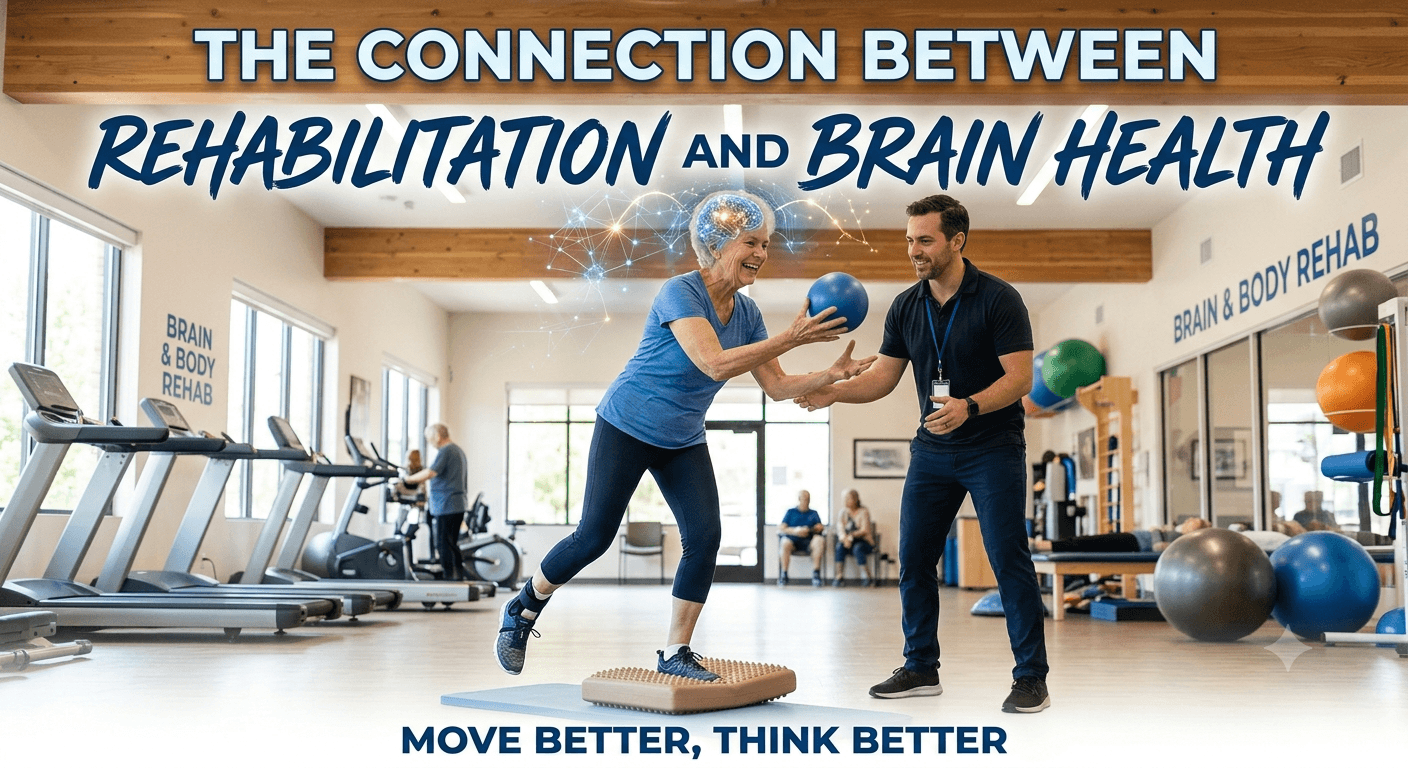
Move Better, Think Better: The Connection Between Rehabilitation and Brain Health
Most people think of rehabilitation as something you do after an injury. In reality, rehabilitation is also one of the most effective ways to support long-term brain health, maintain independence, and improve overall quality of life.
As a Board-Certified Specialist in Physical Rehabilitation, my goal is not simply to reduce pain—it's to improve how your brain and body communicate so you can move more efficiently, perform better, and stay active throughout life.
Why Movement Matters to the Brain
Your brain relies on a constant stream of information from your muscles, joints, eyes, and balance system. Every step you take, every time you reach for an object, and every change in position provides valuable feedback that helps your brain maintain coordination, balance, and function.
When movement becomes restricted by injury, inactivity, poor posture, or inefficient movement patterns, that information becomes less accurate. Over time, this can contribute to declines in balance, coordination, mobility, and overall physical performance.
Brain health experts increasingly recognize that preserving movement is a critical component of maintaining cognitive health as we age.
Building a Brain-Healthy Lifestyle
Neurologist Dr. David Dodick emphasizes that optimal brain health requires a comprehensive approach that includes:
• Regular physical activity
• Quality sleep
• Good nutrition
• Stress management
• Cognitive challenges
• Social engagement
Current recommendations include at least 150 minutes of moderate exercise per week, along with resistance training, aerobic conditioning, and activities that challenge coordination and balance.
Activities such as dancing, racket sports, martial arts, and even learning new movement skills can provide unique benefits by engaging multiple areas of the brain simultaneously.
How Rehabilitation Supports Brain Function
Neuromuscular rehabilitation is about much more than recovering from pain or injury.
When we improve balance, coordination, mobility, and motor control, we are actively stimulating the nervous system and promoting healthy brain function.
These interventions help:
✓ Enhance neuroplasticity—the brain's ability to adapt and create new connections
✓ Reinforce efficient movement patterns and neural pathways
✓ Improve balance and reduce fall risk
✓ Maintain functional independence
✓ Support lifelong mobility and physical confidence
Research continues to demonstrate that movement quality is every bit as important as strength and endurance when it comes to healthy aging.
This Week's Movement Challenge
Add a little variety to your routine.
Try one or more of the following:
• Walk a different route than usual
• Practice changing directions during exercise
• Incorporate balance exercises into your workout
• Slow down your movements and focus on control
• Learn a new physical skill or activity
Remember: Consistency beats intensity. Small amounts of quality movement performed regularly produce greater long-term benefits than occasional bursts of exercise.
Patient Tip of the Week
Try this simple brain-body exercise:
Stand on one leg while slowly turning your head from side to side for 30 seconds.
Repeat on the opposite leg.
This exercise challenges your balance, visual system, vestibular system, and body awareness simultaneously—helping improve coordination and sensory integration.
Always perform near a stable surface for safety.
Final Thought
There is no single supplement, exercise, or treatment that guarantees lifelong brain health. The key is creating daily habits that continuously challenge and support the nervous system.
Every time you improve how your body moves, you are also investing in how your brain functions.
Move well. Stay active. Protect your future.
Mitch Green, DC, DACRB, FACC
Board Certified in Neuromuscular Rehabilitation
Fellow, American College of Chiropractors
American Chiropractic Rehabilitation Board Approved Certified Lead Instructor
Northeast College of Health Sciences Post Graduate Instructor
past New York State Chiropractic Association District 1 President
past Director of the Dance Injury and Rehabilitation Clinic for the
Manhattan Youth Ballet
212-269-0300